When Passion Becomes Unpaid Labour
The Reality of Freelance Modelling in the Gig Economy
Freelancing is often seen as freedom—you choose your projects, set your own schedule, and own your image. Sometimes it genuinely feels empowering. But that independence can also make you invisible.
In the modeling industry, unpaid fittings, long travel days, and 6-hour shoots are considered normal. What agencies call "gaining experience" actually means absorbing hidden costs—like transport, prep time, and hours of waiting—without any formal protection or pay.
When I first started modeling, I accepted unpaid fittings as part of the industry. I would travel across Tokyo for a 15-minute fitting, wait around for hours, and then leave without any payment. Everyone said it was normal.
But I've stopped accepting “normal”.
Cullen (2013) in The Nation explains how models have long been classified as independent contractors, allowing the industry to sidestep wage and hour laws. Rabinowitz (2015) in The Guardian describes a parallel culture of unpaid labour—castings, rehearsals, endless waiting—all framed as opportunity. Reading their work, I recognized my own reality: glamorous from the outside, precarious from within.
This classification isn't just semantics. It's a legal loophole that lets agencies avoid overtime, benefits, and basic worker protections. Behind the runway lights lies a quiet economy of invisible labour—one where passion is weaponized against fairness.
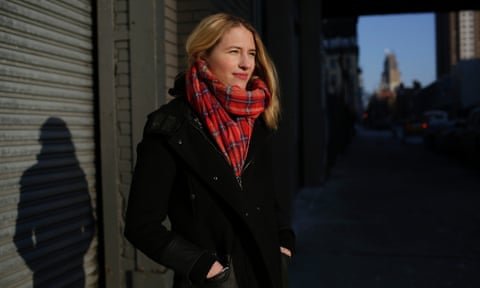 |
| Sara Ziff, model and labor organizer, who has been fighting for the rights of models in the workplace. She now counts 400 members in her organisation Model Alliance. Photograph: Joshua Lott/The Guardian |
Are models genuinely independent freelancers, or are they misclassified employees denied basic protections?
Foster (2024) in Fashion Law Journal argues that creative professionals like models occupy a hybrid zone—they're neither traditional employees nor fully independent businesses. Unfortunately, employment law in many countries hasn't caught up with this reality.
To understand this better, consider the ABC test. Many jurisdictions use this test to determine whether someone is an employee or an independent contractor. Under this test, a person is presumed to be an employee unless they meet all three of these conditions:
A) They work without direction or control from the hiring entity
B) They perform work outside the usual course of the hiring entity's business
C) They are customarily engaged in an independently established trade or business
While I manage my own bookings, the fashion ecosystem still controls much of my work. Clients decide when and where I work, what I wear, and how I look. They also expect me to do unpaid preparation work. Even though I'm called a "freelancer," I'm still dependent on these larger companies.
This creates a contradiction: I have freedom on paper, but dependence in reality. The industry praises our independence while taking advantage of unclear legal definitions. Because of this misclassification, unpaid fittings and long shoots without overtime pay exist in legal grey areas. There's an entire hidden system of unpaid work, and it's justified by claiming we're doing what we're passionate about.
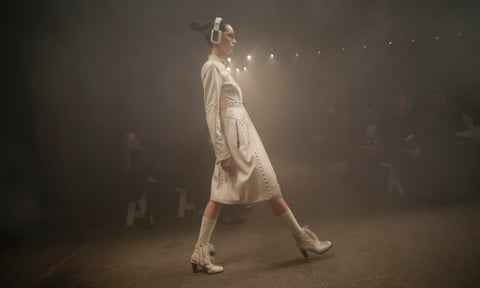 |
| Models at New York fashion week. A vast proportion of these women will most likely leave New York in debt. Photograph: Joshua Lott/The Guardian |
This isn't about vanity—it's about value. Every unpaid hour backstage shows how society values creative work. The real question isn't whether I belong to an agency, but whether my labor is truly valued.
Foster (2024) suggests creating a "dependent contractor" category. This hybrid status would give workers flexibility while ensuring basic protections—like payment for fittings, reasonable work hours, and clear written contracts. It's a way to protect freelancers without taking away their independence.
This issue goes far beyond fashion. Couriers, stylists, content creators—anyone in the gig economy—face the same trade-off: flexibility comes with all the risk pushed onto workers.
I love the independence of freelancing, but independence shouldn't mean isolation. If the industry keeps treating unpaid work as just part of pursuing your passion, it won't only exploit individuals—it will undermine the artistry that makes fashion meaningful in the first place. Recognizing models as workers isn't anti-fashion. It's about fairness.
Fashion models are workers, too | The Nation. (2015, June 29). The Nation. https://www.thenation.com/article/archive/fashion-models-are-workers-too/
Hackman, R. (2018, July 9). Model life: to call it indentured servitude is no exaggeration. The Guardian. https://www.theguardian.com/fashion/2015/feb/19/model-life-indentured-servitude-no-exaggeration
Journal, F. L. (2024, October 1). Employment law and the rights of fashion models. Fashion Law Journal. https://fashionlawjournal.com/employment-law-and-the-rights-of-fashion-models


This comment has been removed by the author.
ReplyDeleteI think your post captures the hidden reality of freelance modeling with a sharp mix of personal experience and legal context. The contrast between “freedom on paper” and dependence in practice came through especially clearly, and the way you explained the ABC test made the structural problem easy to understand. Maybe you could include examples of how to change or avoid this problem.
ReplyDelete